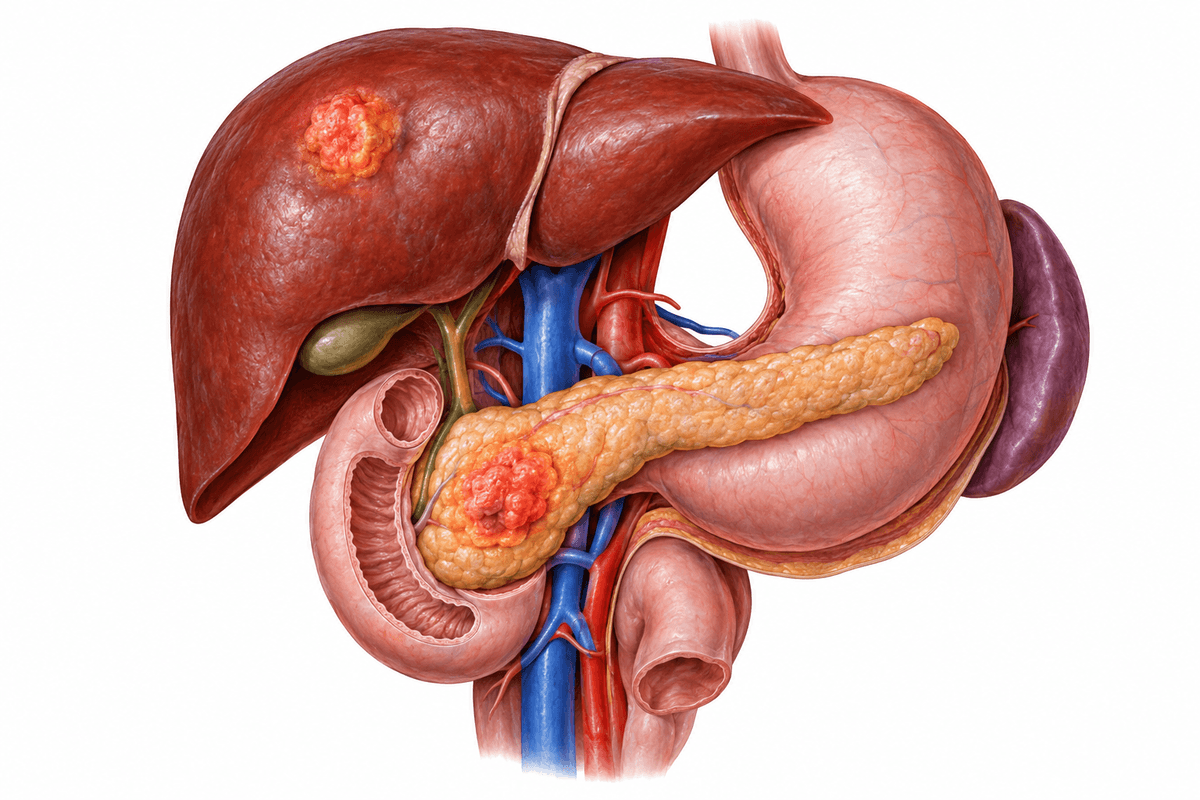
Treated by Dr. Moode Jayanth at Dr Jayanth Moode
Pancreatic and liver tumours are abnormal growths in these vital digestive organs that can be benign or malignant, requiring specialized surgical intervention in Hyderabad. These tumours may arise from various cell types within the pancreas or liver and can significantly impact digestive function, metabolism, and overall health. Early detection and expert surgical management are crucial for optimal outcomes. Dr Jayanth Moode, a leading gastrointestinal surgeon, provides comprehensive evaluation and advanced surgical treatment for pancreatic and liver tumours with personalized care protocols.
The most common malignant pancreatic tumour arising from ductal cells, representing about 90% of pancreatic cancers. It typically affects the head of the pancreas and often presents at advanced stages due to subtle early symptoms.
Primary liver cancer originating from hepatocytes, often developing in patients with chronic liver disease or cirrhosis. It is one of the most common liver malignancies worldwide and requires specialized surgical expertise for resection or transplantation.
Rare tumours arising from hormone-producing cells in the pancreas, which can be functional or non-functional. These tumours generally have a better prognosis than adenocarcinoma and may be amenable to surgical resection with favourable outcomes.
Multiple factors can contribute to the development and progression of this condition.
Tumours - Pancreas & Liver develops gradually. Recognising symptoms early gives you more treatment options.
From conservative to surgical — we always start with the least invasive option first.
A structured, patient-first approach from first visit to full recovery.
Dr Jayanth Moode conducts thorough clinical assessment with advanced imaging review and coordinates with medical oncologists, radiologists, and pathologists to develop an individualized treatment plan based on tumour characteristics, stage, and patient fitness.
Detailed preoperative planning using 3D reconstruction of vascular anatomy and tumour relationships to determine optimal surgical approach. Dr Moode discusses resectability, surgical risks, expected outcomes, and alternative options with patients and families to ensure informed decision-making.
Dr Jayanth Moode performs complex hepatobiliary and pancreatic surgeries with meticulous technique, utilizing minimally invasive approaches when appropriate. Intraoperative assessment ensures complete tumour removal with adequate margins while preserving critical structures and optimizing functional outcomes.
Structured recovery protocols with close monitoring in advanced surgical intensive care units, early complication detection, nutritional support, and pain management. Dr Moode coordinates adjuvant therapy when indicated and provides long-term surveillance with regular imaging and tumour marker monitoring.
What to expect at each phase of recovery.
Hospital stay with intensive monitoring for complications such as bile leak, pancreatic fistula, or bleeding. Gradual resumption of oral intake, drain management, and mobilization. Most patients require 7-14 days of hospitalization depending on procedure complexity and individual recovery.
Transition to home care with wound healing, drain removal, and progressive activity increase. Nutritional rehabilitation with enzyme supplementation if needed. Surgical pathology review determines need for adjuvant therapy. Follow-up appointments monitor for delayed complications and functional recovery.
Regular imaging and tumour marker surveillance every 3-6 months to detect recurrence early. Coordination of adjuvant chemotherapy or targeted therapy protocols. Nutritional counseling, diabetes management if present, and quality of life optimization. Lifelong follow-up with multidisciplinary team ensures comprehensive cancer survivorship care.
Successful removal of all visible tumour with negative microscopic margins (R0 resection) offers the best chance for long-term survival and potential cure, particularly for early-stage disease with favourable biology.
Relief from obstructive jaundice, pain control, and restoration of digestive function significantly enhance daily functioning and well-being even in advanced cases where cure may not be possible.
Combination of surgical resection with modern chemotherapy protocols has significantly improved median survival rates, with some patients achieving five-year survival and beyond, particularly with neuroendocrine tumours and early-stage hepatocellular carcinoma.
Timely surgical intervention prevents life-threatening complications such as biliary obstruction, gastric outlet obstruction, tumour bleeding, and liver failure, while maintaining nutritional status and functional independence.
Untreated pancreatic and liver tumours progressively grow and metastasize, leading to severe complications including obstructive jaundice, liver failure, intractable pain, malnutrition, and cachexia. Most malignant pancreatic and liver tumours are rapidly fatal without treatment, with median survival measured in months. Early intervention significantly improves survival rates and quality of life, making timely evaluation by a specialized gastrointestinal surgeon essential for optimal outcomes.
Seek immediate consultation with Dr Jayanth Moode if you experience persistent unexplained abdominal pain, new-onset jaundice, unexplained weight loss exceeding 10% of body weight, or changes in stool colour accompanied by dark urine. Patients with chronic liver disease, hepatitis, or a family history of pancreatic cancer should undergo regular surveillance. Any imaging study suggesting a pancreatic or liver mass requires prompt evaluation by an experienced gastrointestinal surgeon for definitive diagnosis and treatment planning.
Early treatment means more options and better outcomes. Book a consultation to understand your condition and explore the right path forward.