Treated by Dr. Moode Jayanth at Dr Jayanth Moode
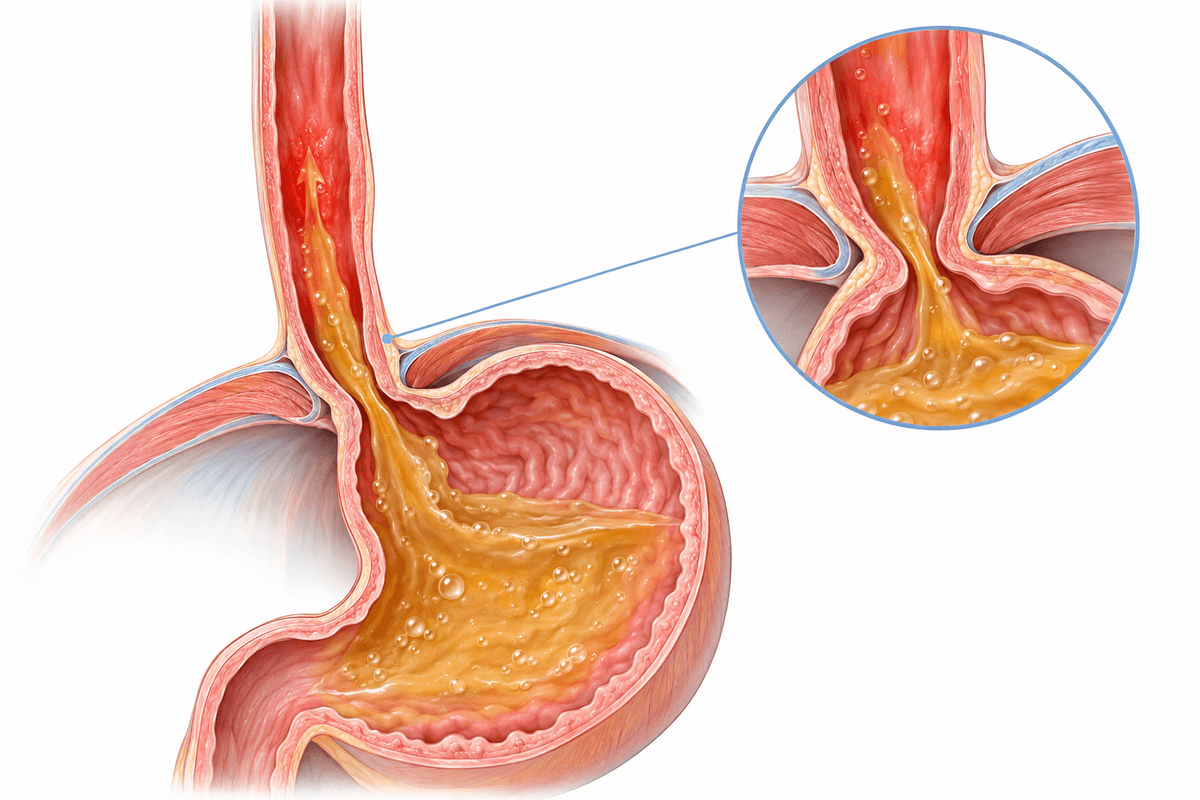
GERD or Reflux Disease in Hyderabad affects millions who experience chronic acid reflux causing heartburn and regurgitation. This condition occurs when stomach acid frequently flows back into the esophagus, irritating its lining and potentially leading to serious complications if left untreated. Dr Jayanth Moode provides comprehensive evaluation and evidence-based treatment options for patients seeking relief from reflux disease.
Most common form where patients experience typical reflux symptoms like heartburn and regurgitation, but endoscopy shows no visible damage to the esophageal lining. Symptoms are present but mucosal breaks are absent.
Advanced form characterized by visible inflammation, erosions, or ulcerations in the esophageal lining seen during endoscopy. Represents more severe acid exposure and tissue damage requiring aggressive management.
Complication where chronic acid exposure causes abnormal cellular changes in the lower esophagus, replacing normal tissue with intestinal-type cells. Considered a pre-cancerous condition requiring regular surveillance and specialized treatment.
Multiple factors can contribute to the development and progression of this condition.
GERD or Reflux Disease develops gradually. Recognising symptoms early gives you more treatment options.
From conservative to surgical — we always start with the least invasive option first.
A structured, patient-first approach from first visit to full recovery.
Dr Jayanth Moode conducts detailed assessment including upper endoscopy, pH monitoring, esophageal manometry, and imaging studies to determine reflux severity, identify complications like Barrett's esophagus, and evaluate esophageal function before recommending personalized treatment.
Based on diagnostic findings, symptom severity, and patient preferences, Dr Moode develops individualized management strategy ranging from lifestyle optimization and medications to advanced surgical interventions, ensuring each patient receives care matching their specific needs.
For patients requiring surgery, Dr Jayanth Moode performs state-of-the-art laparoscopic or robotic fundoplication procedures using minimally invasive techniques, ensuring precise anatomical reconstruction while minimizing surgical trauma and promoting rapid recovery with excellent long-term outcomes.
Post-treatment care includes regular follow-up appointments, endoscopic surveillance when indicated, dietary counseling, and symptom monitoring to ensure sustained relief, detect any recurrence early, and adjust management strategies to maintain optimal esophageal health throughout the patient's life.
What to expect at each phase of recovery.
After surgical intervention, patients follow liquid then soft diet progression, manage minimal discomfort with prescribed medications, and resume light activities gradually. Most return to desk work within one week with restrictions on heavy lifting and strenuous exercise.
Dietary advancement continues with introduction of solid foods following structured guidelines. Patients adapt to new swallowing mechanics, experience reduced reflux symptoms, and progressively increase physical activities. Follow-up visits ensure proper healing and address any concerns.
Complete healing occurs with patients enjoying normal diet and activities without reflux symptoms. Adaptive changes stabilize, and patients learn to maintain results through appropriate eating habits. Most achieve medication-free status with excellent quality of life improvement.
Over 90% of patients experience complete or near-complete elimination of heartburn, regurgitation, and related symptoms following appropriate treatment, with surgical intervention providing most durable long-term relief for severe cases.
Surgical treatment enables most patients to discontinue daily acid-suppression medications, eliminating long-term drug costs and potential side effects while maintaining effective reflux control through anatomical correction.
Patients report significant improvements in sleep quality, dietary freedom, social functioning, and overall well-being after successful reflux treatment, with ability to enjoy foods and activities previously limited by symptoms.
Effective GERD management prevents progression to serious complications including Barrett's esophagus, esophageal strictures, chronic aspiration, and esophageal adenocarcinoma, protecting long-term esophageal health and reducing cancer risk.
Untreated GERD progressively damages the esophageal lining, potentially leading to Barrett's esophagus with increased cancer risk, esophageal strictures causing severe swallowing difficulty, chronic respiratory problems from aspiration, and persistent bleeding or ulceration. Long-term acid exposure significantly impairs quality of life and may result in life-threatening complications requiring emergency intervention. Early treatment prevents these serious outcomes and preserves esophageal health.
Seek consultation if you experience heartburn more than twice weekly, difficulty swallowing, persistent chest pain, chronic cough or hoarseness, regurgitation disrupting sleep, or symptoms unresponsive to over-the-counter medications. Immediate medical attention is required for severe chest pain, vomiting blood, black tarry stools, unexplained weight loss, or inability to swallow, as these indicate serious complications requiring urgent evaluation and treatment by a gastrointestinal specialist like Dr Jayanth Moode.
Early treatment means more options and better outcomes. Book a consultation to understand your condition and explore the right path forward.