Treated by Dr. Moode Jayanth at Dr Jayanth Moode
Abdominal pain and ulcer problems in Hyderabad affect thousands annually, ranging from mild gastritis to severe peptic ulcers that require specialized care. These conditions involve damage to the stomach or duodenal lining, causing pain, discomfort, and potentially serious complications if untreated. Dr Jayanth Moode offers comprehensive evaluation and evidence-based treatment for all types of ulcer-related abdominal pain.
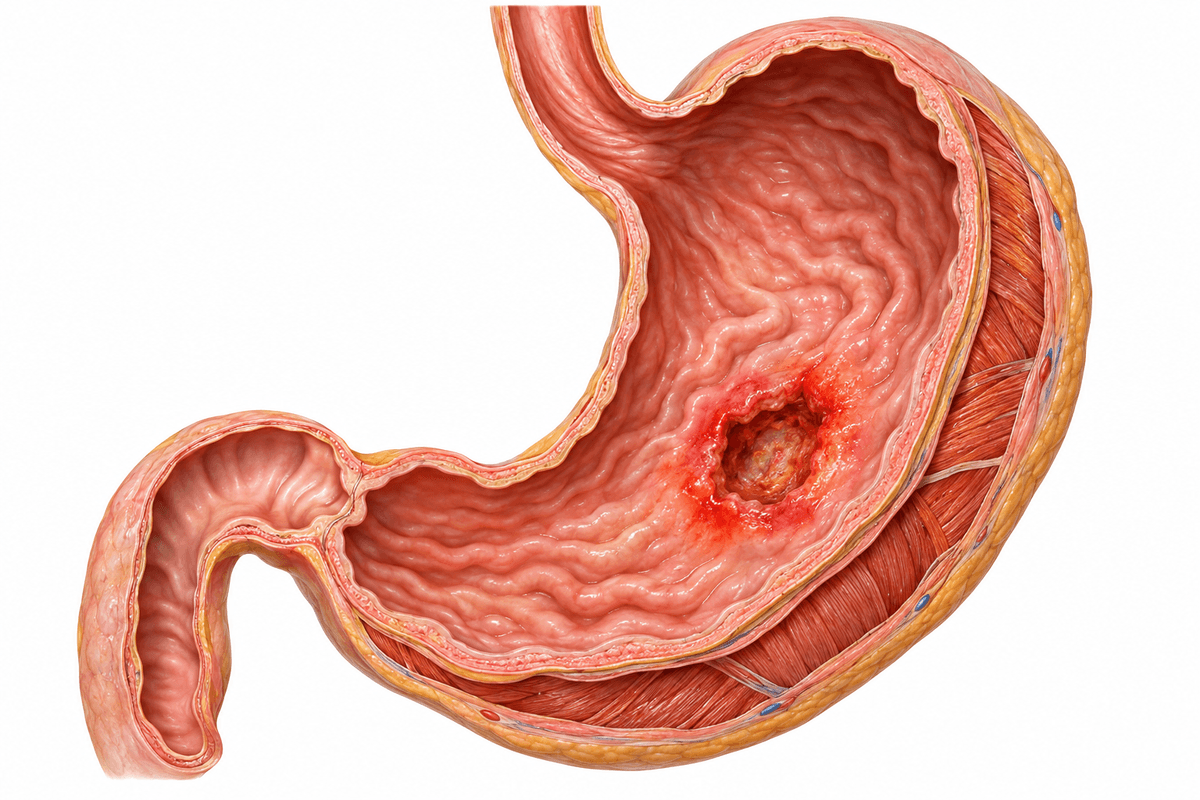
Open sores that develop on the inner lining of the stomach, typically causing pain after eating, nausea, and bloating. These ulcers can occur anywhere in the stomach but are most common along the lesser curvature.
Ulcers forming in the first part of the small intestine (duodenum), usually causing pain when the stomach is empty or during night hours. These are the most common type of peptic ulcer and often respond well to medical management.
Acute ulcers that develop suddenly due to severe physiological stress from critical illness, major surgery, or trauma. These typically occur in hospitalized patients and require prompt intensive management to prevent bleeding complications.
Multiple factors can contribute to the development and progression of this condition.
Abdominal pain and Ulcer problem develops gradually. Recognising symptoms early gives you more treatment options.
From conservative to surgical — we always start with the least invasive option first.
A structured, patient-first approach from first visit to full recovery.
Dr Jayanth Moode begins with detailed history taking and physical examination, followed by upper gastrointestinal endoscopy with biopsy to visualize ulcers directly, test for H. pylori, and exclude malignancy. Additional imaging like CT scan may be ordered if complications are suspected.
Based on ulcer type, size, location, and presence of H. pylori or complications, Dr Moode develops an individualized treatment plan. This may range from medical management with acid suppressants and antibiotics to advanced endoscopic or surgical interventions for complicated cases.
For patients requiring surgery due to perforation, obstruction, bleeding, or treatment failure, Dr Jayanth Moode employs minimally invasive laparoscopic techniques whenever possible. His expertise ensures precise repair with minimal tissue trauma, faster recovery, and excellent cosmetic outcomes.
Dr Moode provides structured follow-up with repeat endoscopy to confirm ulcer healing, verify H. pylori eradication, and monitor for recurrence. He emphasizes lifestyle modifications, appropriate NSAID use, and long-term acid suppression when indicated to prevent ulcer recurrence.
What to expect at each phase of recovery.
For medical management, symptom relief typically begins within 3-5 days with complete healing in 4-8 weeks. After endoscopic therapy, patients are monitored for 24-48 hours for rebleeding. Surgical patients begin mobilization within 24 hours with gradual diet advancement over 3-5 days.
Ulcer healing is confirmed by repeat endoscopy at 6-8 weeks for gastric ulcers or 12 weeks for refractory cases. Post-surgical patients return to light activities within 2 weeks and full activities by 4-6 weeks. Dietary modifications are gradually relaxed as healing progresses.
H. pylori eradication is verified by breath test or stool antigen 4 weeks after completing antibiotics. Patients requiring long-term NSAID therapy receive prophylactic acid suppression. Annual follow-up includes symptom assessment and endoscopy if warning signs develop, ensuring sustained healing and early detection of recurrence.
Over 90% of uncomplicated peptic ulcers heal completely with appropriate medical therapy within 8 weeks, with successful H. pylori eradication preventing recurrence in most cases and restoring normal digestive function.
Most patients experience significant pain relief within one week of starting treatment, with complete symptom resolution by 4-6 weeks. Quality of life improves dramatically as eating becomes comfortable and sleep disturbances from night pain resolve.
Timely diagnosis and treatment prevent serious complications like perforation, bleeding, and obstruction in over 95% of cases. Successful H. pylori eradication reduces ulcer recurrence rates from 70% to less than 5% annually.
Laparoscopic repair of perforated ulcers achieves success rates exceeding 95% with minimal morbidity. Emergency surgery for bleeding controls hemorrhage in over 90% of cases, while elective surgery for refractory ulcers provides definitive cure with low recurrence rates.
Untreated peptic ulcers progressively worsen, leading to life-threatening complications including perforation causing peritonitis, severe bleeding requiring emergency transfusion, and gastric outlet obstruction from chronic scarring. Chronic ulcers also increase the risk of gastric cancer, particularly when H. pylori infection persists untreated for years.
Seek immediate medical attention if you experience severe sudden abdominal pain, vomit blood or material resembling coffee grounds, pass black tarry stools, or feel faint and weak. Schedule an appointment with Dr Jayanth Moode if you have persistent upper abdominal pain lasting more than a week, pain that awakens you at night, difficulty eating due to discomfort, or unintended weight loss.
Early treatment means more options and better outcomes. Book a consultation to understand your condition and explore the right path forward.