Treated by Dr. Moode Jayanth at Dr Jayanth Moode
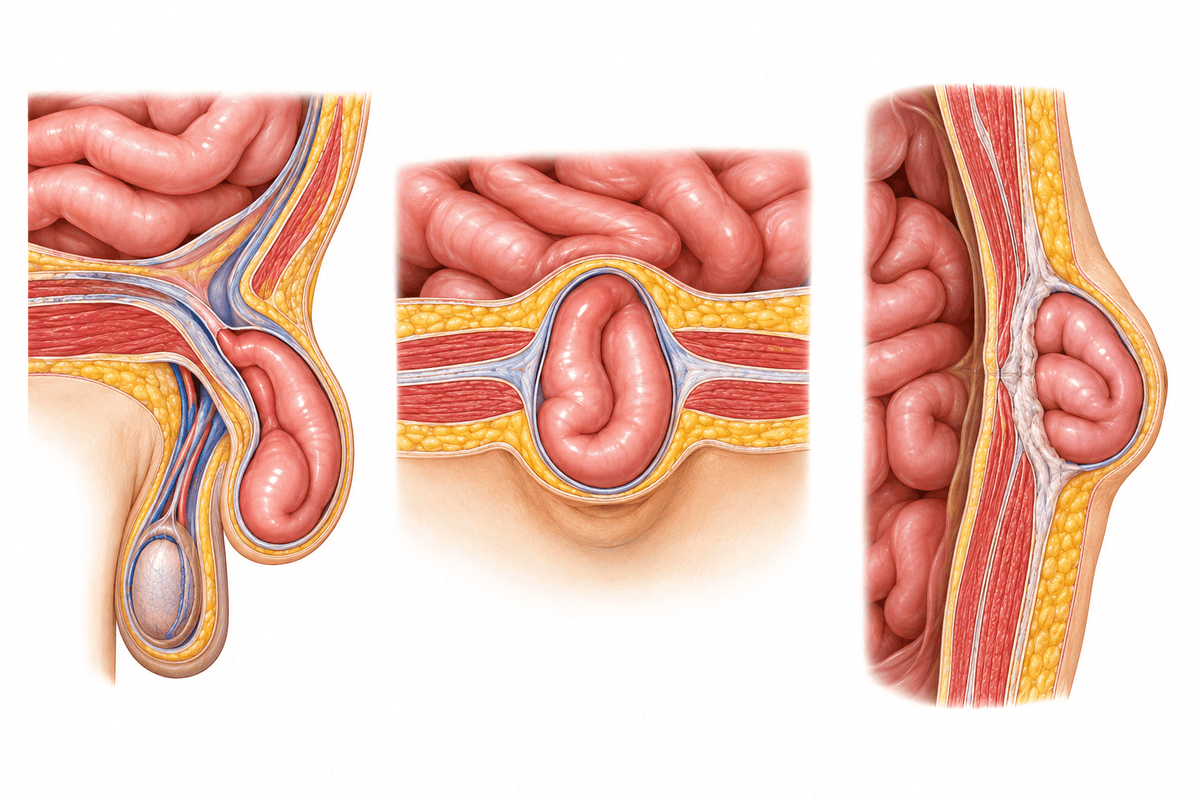
A hernia occurs when an organ or tissue pushes through a weak spot in the surrounding muscle or connective tissue, creating a visible bulge. In Hyderabad, hernias are among the most common surgical conditions, with inguinal (groin), umbilical (belly button), and incisional (previous surgical site) hernias being the most frequent types. Dr Jayanth Moode specializes in advanced hernia repair techniques, offering both open and minimally invasive laparoscopic approaches tailored to each patient's specific condition and needs.
Occurs in the groin area when abdominal contents protrude through the inguinal canal. Most common in men, it can be indirect (congenital weakness) or direct (acquired weakness). Accounts for approximately 75% of all abdominal wall hernias and often presents as a bulge in the groin that increases with straining or standing.
Develops at the belly button when intestinal tissue pushes through the abdominal wall near the navel. Common in infants but can occur in adults due to obesity, pregnancy, or increased abdominal pressure. In adults, these hernias rarely close spontaneously and typically require surgical intervention to prevent complications.
Forms at the site of a previous surgical incision where the abdominal wall has weakened or failed to heal properly. Can develop months or years after surgery, especially following emergency procedures, wound infections, or in patients with risk factors like obesity or diabetes. May range from small defects to large complex hernias requiring specialized repair techniques.
Multiple factors can contribute to the development and progression of this condition.
Hernia( Inguinal, Umbilical and Incisional) develops gradually. Recognising symptoms early gives you more treatment options.
From conservative to surgical — we always start with the least invasive option first.
A structured, patient-first approach from first visit to full recovery.
Dr Jayanth Moode conducts a thorough physical examination to assess the hernia type, size, and reducibility. He orders appropriate imaging studies such as ultrasound or CT scan when needed to evaluate complex or recurrent hernias, and reviews your complete medical history to identify risk factors and optimize your condition before surgery.
Based on diagnostic findings, Dr Moode discusses all treatment options including watchful waiting versus surgical repair, explaining the benefits and risks of each approach. He recommends the most appropriate surgical technique—laparoscopic or open—tailored to your specific hernia type, size, and overall health status, ensuring you understand the entire treatment journey.
Dr Moode performs hernia repair using state-of-the-art laparoscopic or robotic techniques whenever possible to minimize trauma and accelerate recovery. He uses high-quality mesh materials appropriate for each case and employs meticulous surgical technique to reduce recurrence risk, with all procedures conducted in well-equipped hospitals in Hyderabad with experienced surgical teams.
Dr Moode provides detailed postoperative care instructions and pain management protocols tailored to your procedure. He schedules regular follow-up appointments to monitor healing, address any concerns promptly, and guide your gradual return to normal activities, ensuring optimal long-term outcomes and patient satisfaction throughout your recovery journey.
What to expect at each phase of recovery.
Focus on wound care, pain management with prescribed medications, and gentle walking to prevent blood clots. Patients typically experience mild to moderate discomfort at incision sites. Most can manage daily self-care activities but should avoid lifting anything heavier than 10 pounds. Laparoscopic surgery patients often experience less pain and faster initial recovery than open surgery patients.
Gradual increase in activity levels with continued avoidance of heavy lifting and strenuous exercise. Most patients return to desk work and light activities during this phase. Swelling and bruising resolve progressively. Follow-up appointment with Dr Moode ensures proper healing without complications. Laparoscopic patients may return to most normal activities by week 3.
Progressive return to full activities including exercise and heavy lifting as cleared by Dr Moode. The mesh becomes fully incorporated into tissue, providing long-term strength to the repair. Most patients achieve complete recovery by 6 weeks for laparoscopic repairs and 8-12 weeks for open repairs. Long-term recurrence rates are minimized with proper technique and mesh reinforcement.
Modern hernia repair techniques with mesh reinforcement achieve success rates exceeding 95% with recurrence rates below 5%. Dr Moode's expertise in both laparoscopic and open techniques ensures optimal repair strength and durability, significantly reducing the likelihood of hernia returning and need for repeat surgery.
Minimally invasive laparoscopic approach enables most patients to return to work within 1-2 weeks and resume full activities within 3-4 weeks. This faster recovery minimizes disruption to daily life, reduces time away from work, and allows quicker return to exercise and recreational activities compared to traditional open surgery.
Successful hernia repair eliminates the pain, bulging, and physical limitations associated with hernias. Patients experience restored confidence in physical activities, improved appearance, and freedom from the worry of complications. The repair allows return to normal lifting, exercise, and daily activities without restrictions or discomfort.
Timely surgical repair prevents life-threatening complications such as hernia incarceration and strangulation that require emergency surgery. Elective repair under controlled conditions offers better outcomes, lower complication rates, and easier recovery compared to emergency procedures performed after complications develop.
Untreated hernias progressively enlarge over time, causing increasing pain and limitation of daily activities. The risk of serious complications increases significantly, particularly hernia incarceration where contents become trapped and cannot be reduced, and strangulation where blood supply is cut off, causing tissue death. Strangulated hernias are surgical emergencies requiring immediate intervention with higher complication rates, longer recovery, and increased risk of bowel resection compared to elective repairs.
Seek immediate medical attention if you experience sudden severe pain, nausea, vomiting, or if the hernia becomes firm, tender, and cannot be pushed back in, as these indicate possible strangulation requiring emergency surgery. Schedule an appointment with Dr Jayanth Moode if you notice any bulge in the groin, abdomen, or near a previous surgical scar, even without pain, as early evaluation and elective repair offer the best outcomes. Regular consultation is recommended for any hernia symptoms including discomfort, heaviness, or visible protrusion that worsens with activity.
Early treatment means more options and better outcomes. Book a consultation to understand your condition and explore the right path forward.