Treated by Dr. Moode Jayanth at Dr Jayanth Moode
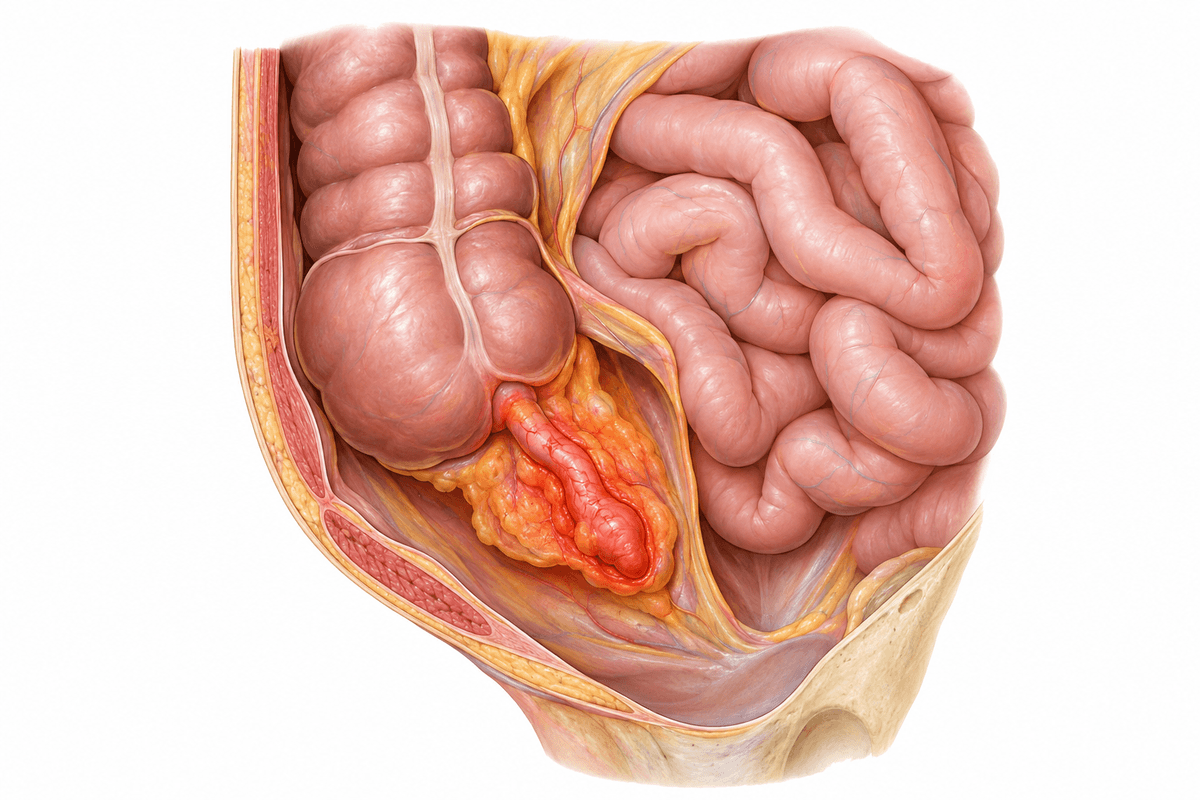
Appendicitis in Hyderabad is a surgical emergency requiring prompt treatment to prevent complications. This condition occurs when the appendix becomes inflamed and infected, causing severe abdominal pain that typically starts around the navel and moves to the lower right side. Dr Jayanth Moode provides expert emergency appendicitis care with advanced laparoscopic techniques for optimal outcomes.
Sudden inflammation of the appendix with rapid onset of symptoms, typically requiring emergency surgery within 24-48 hours to prevent rupture and life-threatening complications.
Recurrent episodes of mild appendix inflammation with intermittent abdominal pain that resolves temporarily, though less common and often difficult to diagnose without imaging studies.
Advanced stage where the inflamed appendix ruptures, spilling infectious material into the abdominal cavity causing peritonitis, abscess formation, and requiring urgent surgical intervention.
Multiple factors can contribute to the development and progression of this condition.
Appendicitis develops gradually. Recognising symptoms early gives you more treatment options.
From conservative to surgical — we always start with the least invasive option first.
A structured, patient-first approach from first visit to full recovery.
Dr Jayanth Moode conducts a thorough clinical examination including assessment of abdominal tenderness, rebound pain, and specific appendicitis signs. Urgent blood tests check for elevated white blood cell counts and inflammatory markers. High-resolution ultrasound or CT imaging confirms appendicitis diagnosis and identifies complications like perforation or abscess formation.
Dr Jayanth Moode initiates immediate fluid resuscitation through IV lines and administers appropriate antibiotics to control infection. Pain management protocols ensure patient comfort while maintaining diagnostic clarity. The surgical team prepares for laparoscopic appendectomy with informed consent discussion covering procedure details, risks, and expected outcomes.
Dr Jayanth Moode performs minimally invasive appendectomy using state-of-the-art laparoscopic equipment with high-definition visualization. Three small incisions allow precise dissection of the appendix while preserving surrounding structures. The appendiceal base is secured with surgical staplers or endoloops, and the specimen is removed in a protective bag to prevent contamination.
Dr Jayanth Moode provides comprehensive postoperative monitoring with early mobilization protocols to prevent complications. Pain management is optimized with multimodal analgesia allowing comfortable recovery. Patients receive detailed discharge instructions including wound care, activity restrictions, and warning signs requiring immediate attention. Follow-up appointments ensure complete healing and address any concerns.
What to expect at each phase of recovery.
Patients are monitored in the recovery room with gradual transition from IV to oral intake. Most laparoscopic appendectomy patients are discharged within 24 hours with oral antibiotics if needed. Pain is managed with prescribed medications, and patients are encouraged to walk short distances to prevent blood clots and promote healing.
Patients gradually resume normal activities with restrictions on heavy lifting and strenuous exercise. Incision sites heal rapidly with minimal discomfort. Most individuals return to desk work within 3-5 days and light activities within one week. Dietary progression from clear liquids to regular food is typically completed within 2-3 days.
Full healing of internal tissues occurs with complete resolution of post-surgical inflammation. Patients can resume all normal activities including exercise and lifting by 2-3 weeks for laparoscopic cases. Follow-up visit confirms proper healing with no complications. Scarring is minimal with laparoscopic approach, and long-term outcomes are excellent.
Over 95% of patients experience complete cure with no recurrence after appendectomy. The appendix does not regenerate, so future appendicitis is impossible. Most patients return to full normal activities within 2-3 weeks with excellent quality of life and no dietary restrictions.
Laparoscopic appendectomy results in three tiny scars (5-10mm) that fade significantly over time and are barely visible. This cosmetic advantage is particularly important for younger patients. The minimally invasive approach preserves abdominal wall integrity with reduced risk of future hernia formation.
Advanced laparoscopic techniques enable most patients to return to work within 3-7 days and resume sports or exercise within 2-3 weeks. The faster recovery means less disruption to professional and personal life. Children and young adults typically recover even more quickly with appropriate care.
Timely appendectomy prevents dangerous complications including perforation, peritonitis, sepsis, and abscess formation. Early surgical intervention significantly reduces mortality risk and hospital stay duration. Patients avoid the severe complications associated with delayed or untreated appendicitis.
Untreated appendicitis invariably progresses to appendiceal perforation within 24-72 hours, spilling infectious bacteria into the abdominal cavity and causing life-threatening peritonitis. This leads to widespread infection, abscess formation, bowel obstruction, and septic shock requiring intensive care treatment. Mortality risk increases significantly from less than 1% with timely surgery to 5-15% with perforation and peritonitis, along with prolonged hospitalization and potential long-term complications.
Seek immediate emergency care if you experience sudden abdominal pain that starts around the navel and migrates to the lower right abdomen, especially when accompanied by fever, nausea, vomiting, or inability to pass gas. Contact Dr Jayanth Moode urgently if pain worsens with movement, coughing, or when pressure is released from the abdomen (rebound tenderness). Any combination of right lower abdominal pain with fever and loss of appetite warrants immediate medical evaluation to prevent complications.
Early treatment means more options and better outcomes. Book a consultation to understand your condition and explore the right path forward.